productlist

High Purity EMD for Battery Material Evaluation

high purity EMD

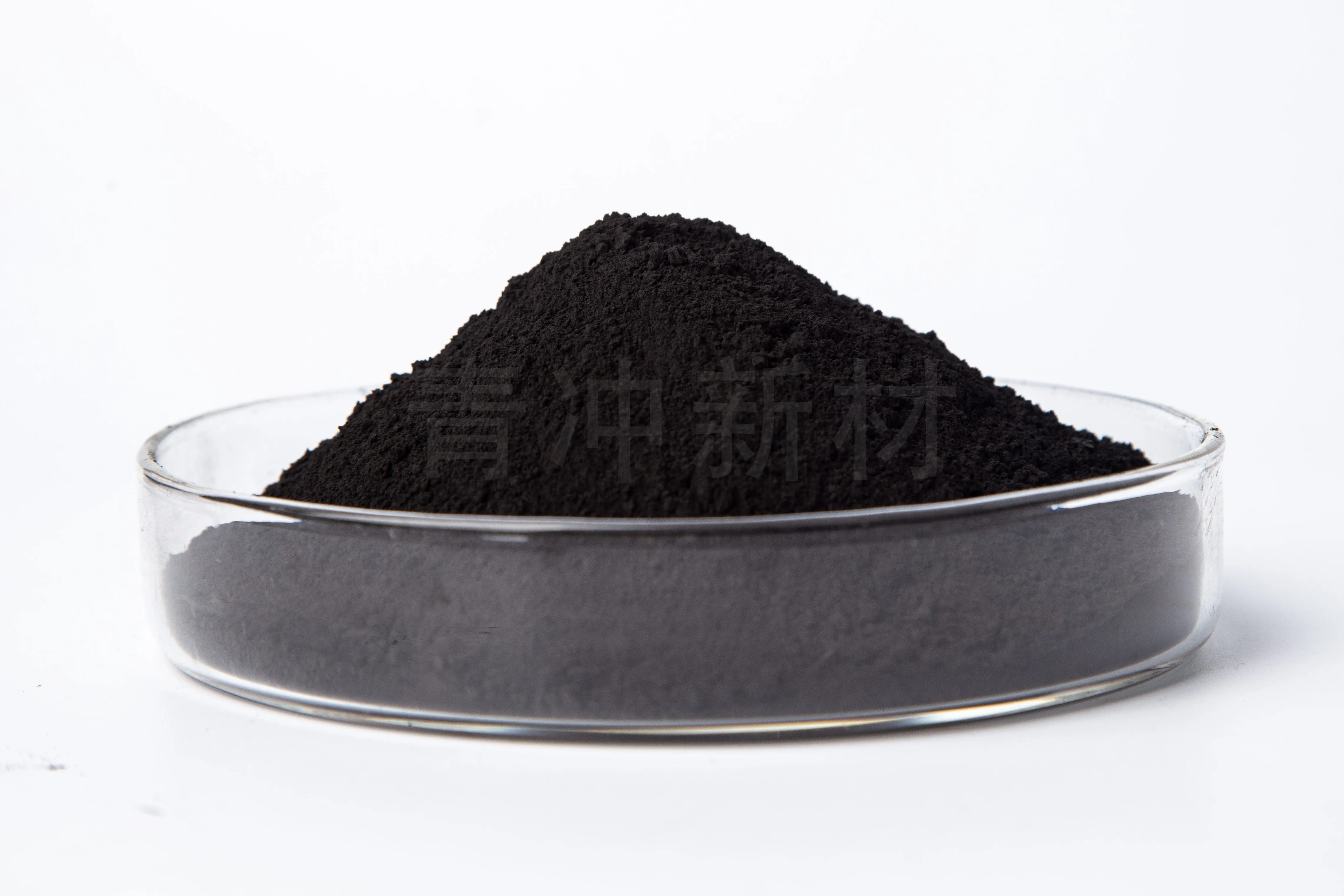
A purchasing request for high purity EMD needs more than the word “pure.” Electrolytic manganese dioxide, or EMD, is a form of manganese dioxide produced by electrolysis. Buyers commonly investigate it for battery cathode formulations, where chemical composition matters alongside electrochemical behavior and compatibility with the rest of the cell. No grade specification has been supplied for this page, so “high purity” should be treated as a purchasing requirement to define and verify, not as a claim that a particular threshold has been met. QingChong New Materials is a Chinese manganese chemical manufacturer integrating R&D, production and sales. Its background makes it a potential point of contact for buyers assessing manganese-based materials, including teams that need to establish whether a proposed EMD grade fits their process. This page explains what the material is, which operating conditions warrant closer review, and what to confirm before placing an order. Start with your intended battery chemistry or other end use, then request a grade-specific specification and test results. That exchange is more useful than relying on a generic purity label.

Technical Detail

Configured around process stability, mold life, and long-term uptime.

The practical meaning of high purity EMD is a controlled manganese dioxide material whose measured composition meets a buyer’s stated limits. It is not a universal grade name. One purchasing team may focus on trace metals that could affect a cell; another may place greater weight on moisture or other constituents relevant to its processing route. Without an agreed test method and acceptance limits, two materials described with the same phrase may be difficult to compare. QingChong New Materials brings a documented organizational background to that discussion: more than 20 years of manganese industry experience, integrated R&D, production and sales operations, and a strict quality control system. The company is located in the Xiangtan Manganese Mine area, a major manganese production base in China. These are relevant facts for a buyer seeking a technically informed discussion and a defined quality review; they are not substitutes for data on a particular EMD lot. For a meaningful comparison, ask QingChong to identify the proposed grade and provide its applicable specification, a representative analysis and the methods used to measure the reported values. Confirm which figures are release limits and which are typical results. If testing is central to your approval process, agree in advance on the sample basis and the documents your team needs. That approach keeps the evaluation tied to evidence rather than an unverified claim of purity.

Electrolytic Manganese Dioxide (EMD)

What Electrolytic Manganese Dioxide Tells You About the Material

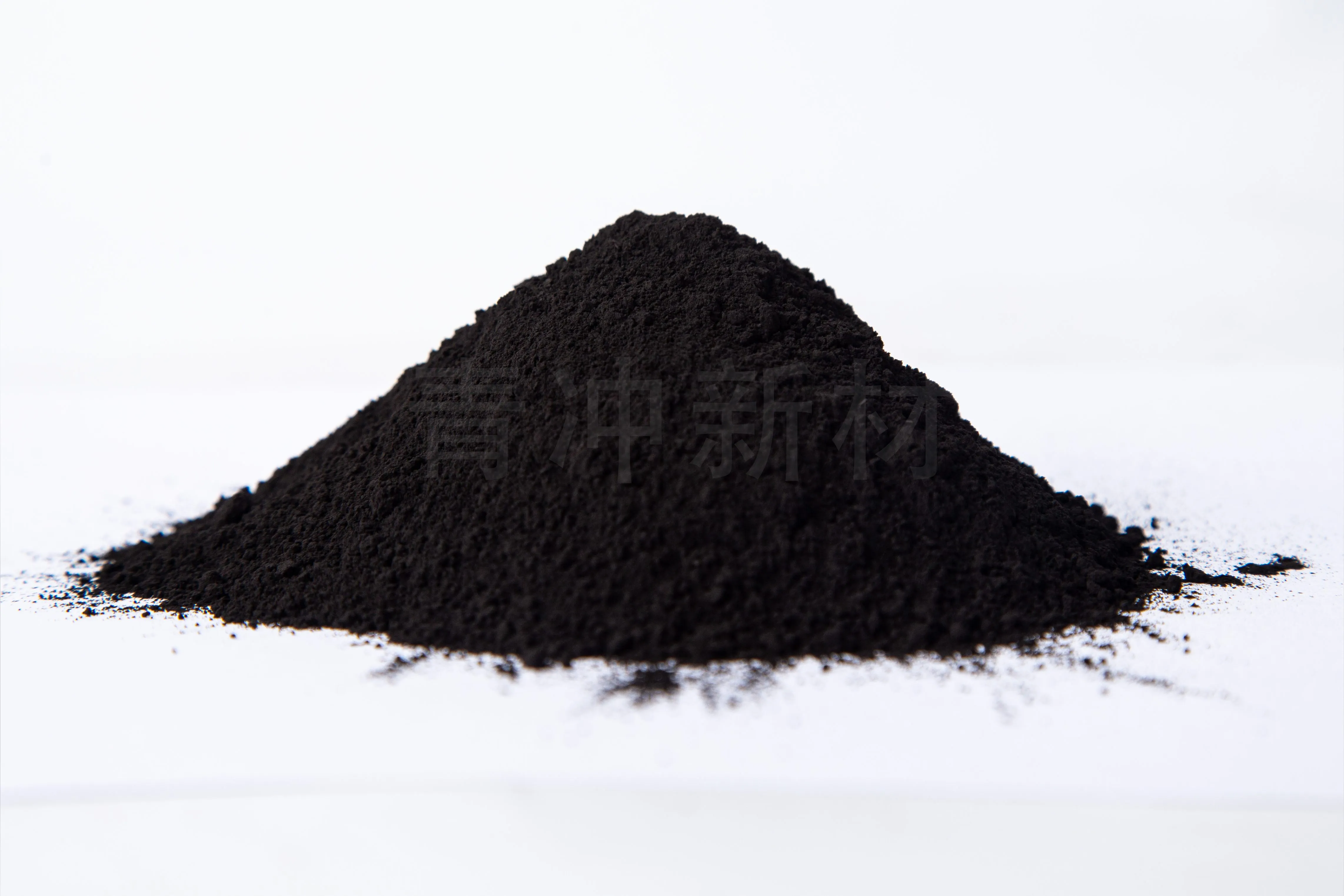
EMD refers to manganese dioxide formed through an electrolytic production route. That distinguishes the production method from manganese dioxide obtained by other routes, but the name alone does not specify a material’s impurity profile or its behavior in a finished battery. “High purity” narrows the discussion only after the buyer and supplier agree on what will be measured. For example, an analysis may report manganese dioxide content and selected impurities, while a battery development team may also need to investigate physical or electrochemical properties. Those are different questions and should not be folded into one purity figure. The distinction matters when reviewing a supplier document. A result expressed on a dry basis may not be directly comparable with one expressed as received; an individual impurity limit is different from a total-impurities figure. QingChong integrates R&D with production and sales, providing an appropriate channel for buyers to put such technical questions alongside a commercial inquiry. Because no EMD specification is included in the supplied information, request the exact grade document rather than assuming a particular composition, particle property or test basis.
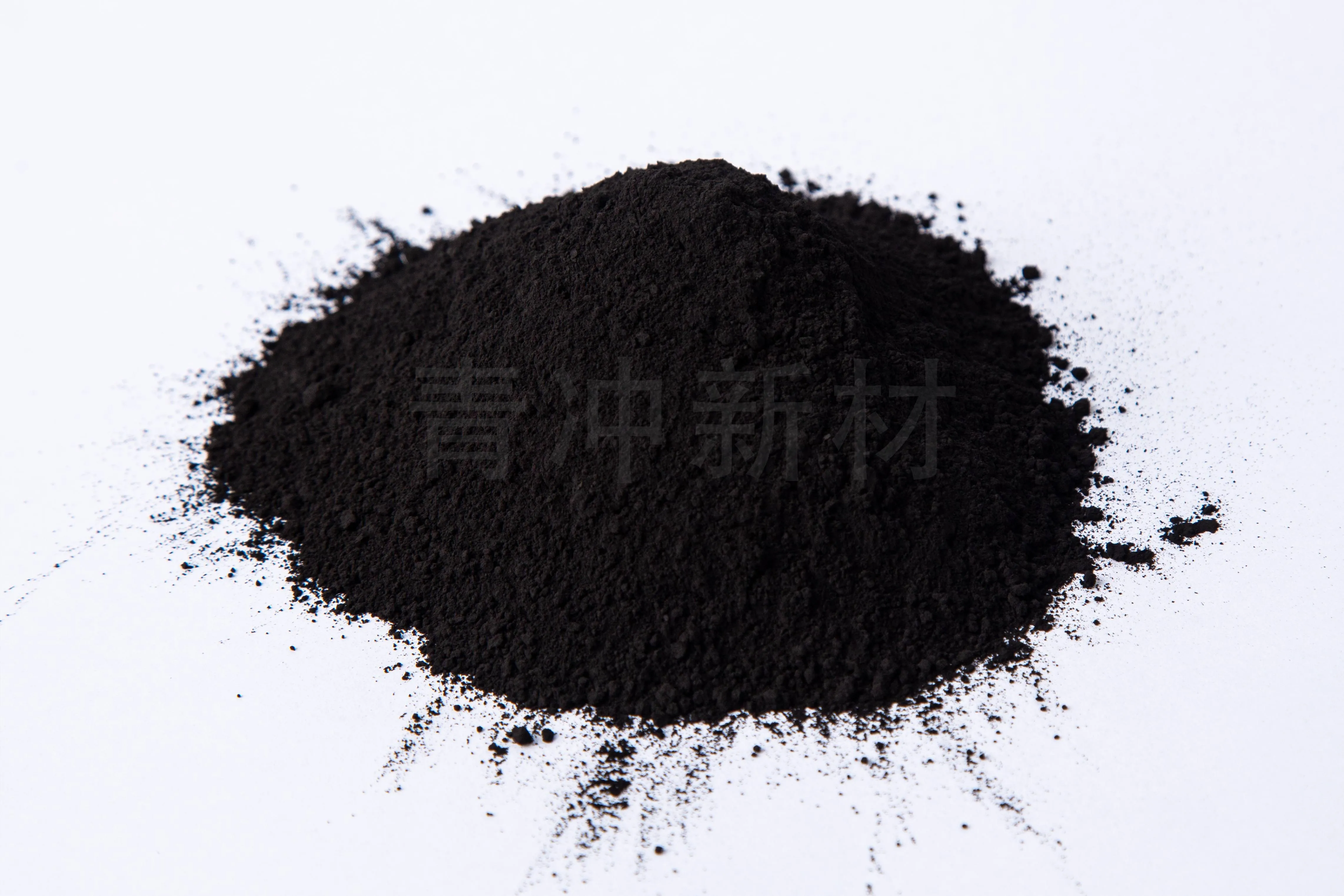
Electrolytic Manganese Dioxide (EMD)

Where EMD Fit Depends on the Cell and Process

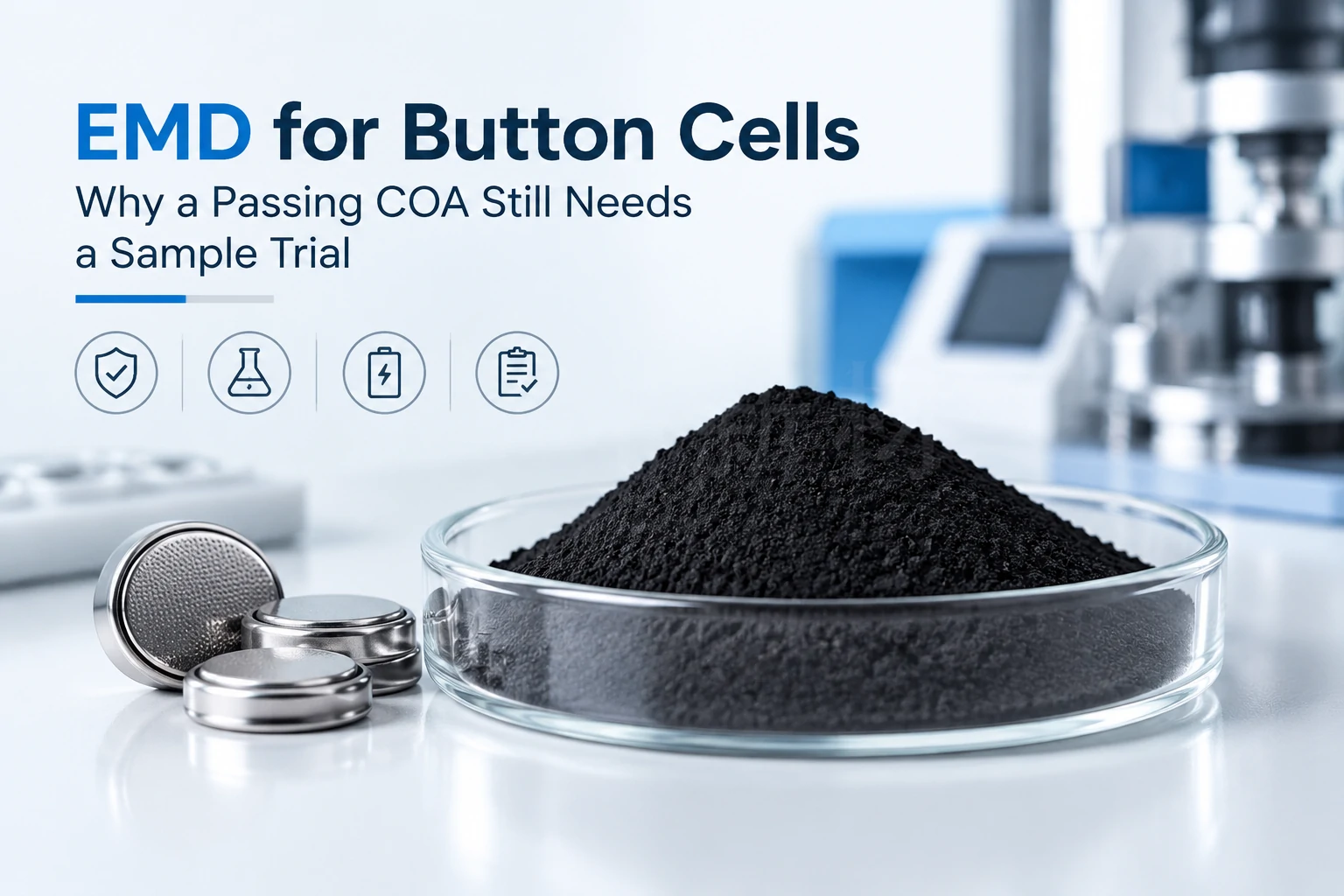
Battery material buyers should evaluate EMD in the context of the cell they intend to make, not by purity wording alone. EMD is commonly associated with manganese dioxide cathodes in primary batteries, including alkaline and zinc-carbon systems. Those applications differ in formulation and manufacturing practice, so a material considered for one design should not automatically be approved for another. Check the proposed grade against your electrode recipe, mixing and forming steps, storage conditions, and the performance tests used for your cell. If your process is sensitive to moisture, particle handling or a specific contaminant, make that concern explicit when requesting data. A material can satisfy a general composition target yet still be unsuitable for a particular production line or electrochemical requirement. Conversely, a specification value has limited meaning if it is unrelated to the conditions under which the material will be used. QingChong’s manganese chemical focus may be relevant to this evaluation, but the information provided does not establish compatibility with any named battery design. Use your own qualification tests and a grade-specific analysis to determine whether the proposed EMD belongs in your application.

Electrolytic Manganese Dioxide (EMD)

Information to Send Before Requesting an EMD Quote

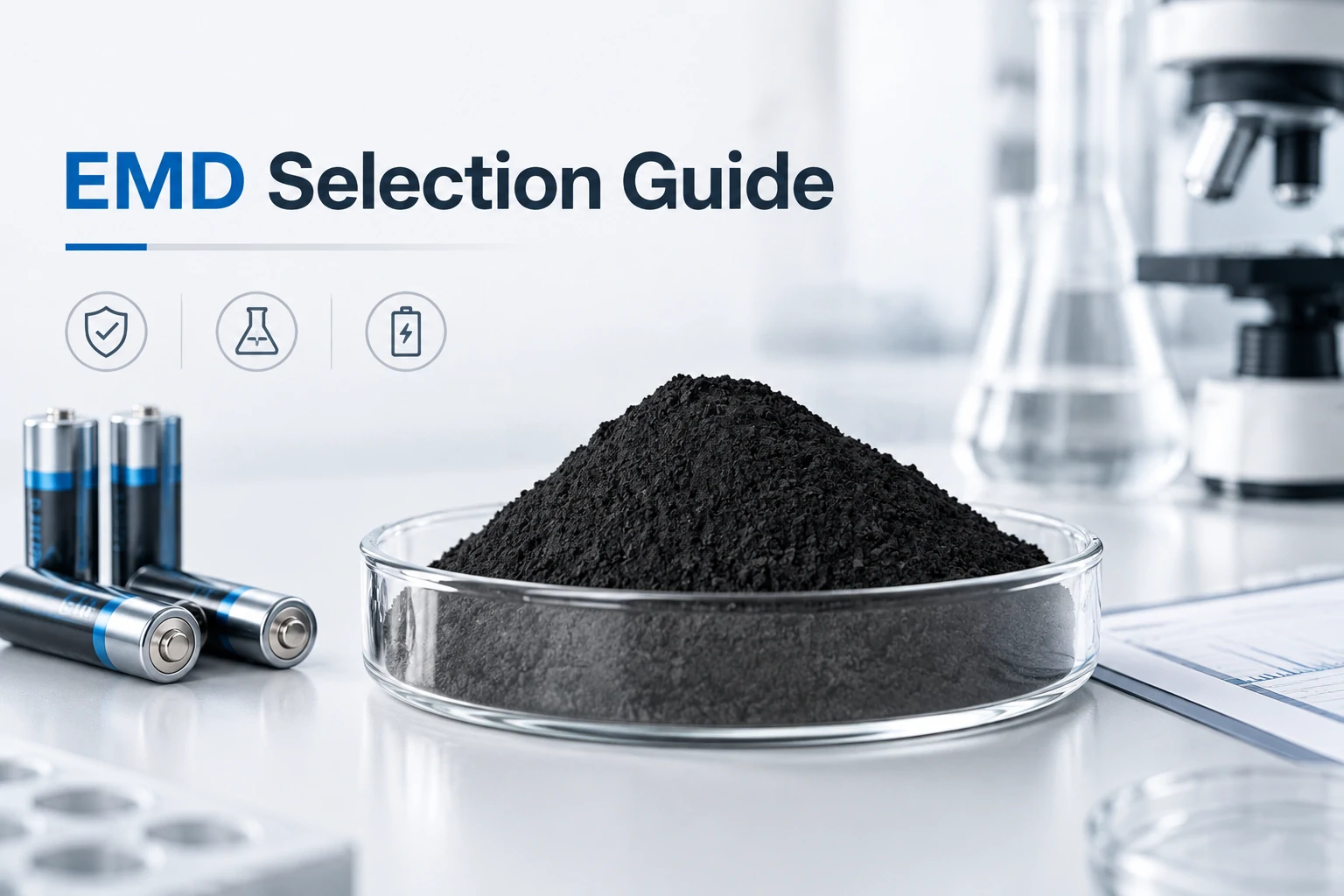
A useful high purity EMD inquiry states the intended use and the acceptance criteria rather than asking only for the “highest purity” option. Tell QingChong whether the material is being assessed for a battery formulation or another application, and identify any chemistry or process constraints you can disclose. List the composition limits you require, the impurities of concern and the analytical methods your team accepts. If physical characteristics affect your process, include the measurements you need reviewed, but do not assume that an undocumented value is available. Next, ask for the proposed grade specification, a representative analysis, the reporting basis for each result and the available sample documentation. Explain how your team will qualify the material, including any comparison against an existing approved grade. Commercial discussions can then refer to a defined grade and document set rather than a broad label. QingChong operates across R&D, production and sales, so directing technical and purchasing questions through the same inquiry can help keep requirements clear. Confirm any requested volume, packaging, delivery terms or documentation directly; none has been specified in the information supplied here.

News

Industry updates

Products

Production modules

Why Choose Us

Why Discuss High Purity EMD Requirements with QingChong?

For a buyer evaluating a tightly defined manganese material, the supplier conversation should connect technical questions with manufacturing and documented quality practices. QingChong New Materials combines R&D, production and sales, and reports a strict quality control system. It also has more than 20 years of manganese industry experience and is located in the Xiangtan Manganese Mine area, one of China’s important manganese production bases. Its company background includes passing ISO9001:2008 quality management system certification in July 2010 and receiving National High-tech Enterprise certification in September 2019. These dated milestones describe organizational experience; buyers should request current evidence for any certification or compliance status required by their procurement rules. QingChong also provides a website in 14 languages, which may help international teams begin a discussion. None of these credentials establishes the purity, availability or suitability of a particular EMD grade. The sound reason to engage the company is to test whether its proposed material and supporting documents match your written requirements. Ask for grade-specific data, clarify any gaps and approve the material through your own qualification process.

FAQ

Common technical questions

Does “high purity” mean the same thing across EMD suppliers?

No. Ask each supplier for numerical acceptance limits, the impurities covered, test methods and whether results are reported on a dry or as-received basis. A headline purity figure alone may not support a fair comparison.

Can I use the same EMD grade for alkaline and zinc-carbon batteries?

Do not assume that you can. Formulation and performance requirements differ. Provide the intended cell chemistry, request the proposed grade data and qualify it against your own production and cell tests.

What should our team check when an EMD sample arrives?

Match the sample identification to its accompanying documents, review the reported test basis and follow your normal incoming-material and qualification procedures. If a result is missing or unclear, resolve that point before treating the sample as representative of an approved grade.

Which documents should I request before selecting a grade?

Request the proposed specification, representative analysis and relevant test methods. State any impurity limits or physical-property requirements your process uses, then confirm whether the proposed grade is evaluated against those criteria.

Need a solution for your project?

Share your product type, target capacity, and application requirements. Our team can review the details and recommend a practical next step.

Contact Us
Whatsapp
WeChat

CONTACT US

Office Address:21/F,Zhonghan Fortune Building,Ji'an Road, Yuetang District,Xiangtan,Hunan,China

Factory Address: Heling Town, Yuhu District, Xiangtan City, Hunan Province, P.R.China

WhatsApp: 8613786275365

Fax: 86-731-52326088

E-mail: [email protected]